Basement Decorative Concrete Floor Transformation
What a basement transformation! This finished interior concrete floor shows how decorative concrete can bring rich visual character, movement, and a polished presence to a basement living space.
Turning a Basement Floor Into Part of the Design
Basement concrete does not have to disappear beneath carpet, tile, or another floor covering. With the right decorative treatment, the concrete itself can become a distinctive finished surface that helps define the entire room.
In this B&B Decorative Concrete project, the finished basement floor features layered gray and taupe tones, natural-looking variation, a visible sheen, and clean linear divisions that give the broad concrete surface structure and character. Against the cool gray walls and crisp white trim, the floor becomes an intentional part of the interior design.
Decorative concrete is widely used for interior floors because existing concrete can support a range of finish options, colors, patterns, and levels of sheen. B&B helps homeowners explore the right approach for the condition of their concrete and the look they want to achieve.
A basement transformation is not only about finishing the walls. When the concrete floor becomes part of the design, the entire room can feel more complete.
A Finished Basement Floor From Three Angles
These photographs document the completed floor from multiple viewpoints. They show how the mottled tonal variation carries through the space and how the floor works with the finished walls, doors, and trim.
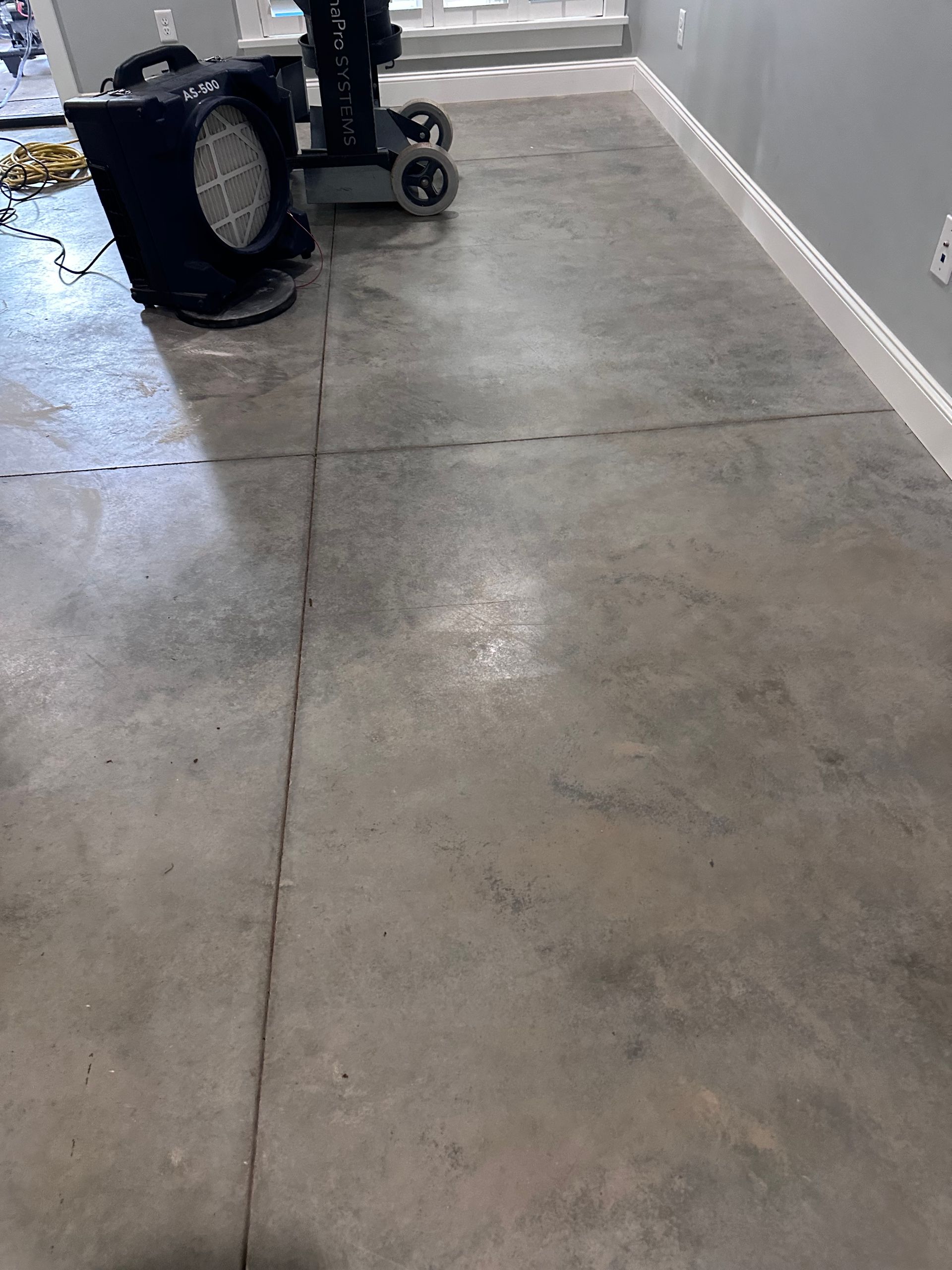
A broad view of the decorative basement floor, with finishing equipment still visible as the project nears completion.
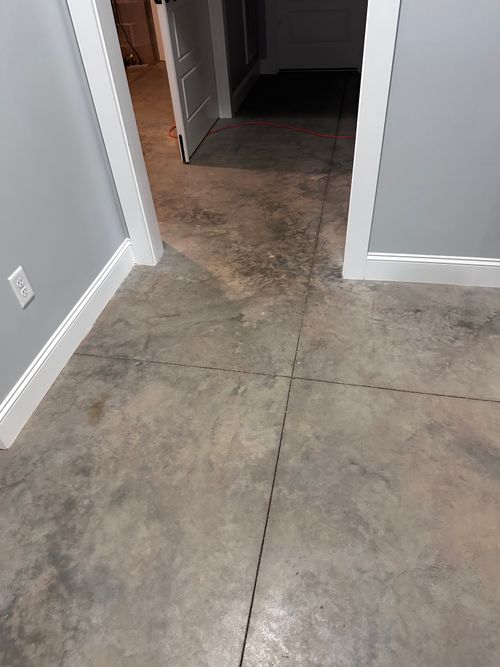
From the adjoining doorway, the concrete finish creates a continuous visual foundation for the basement interior.
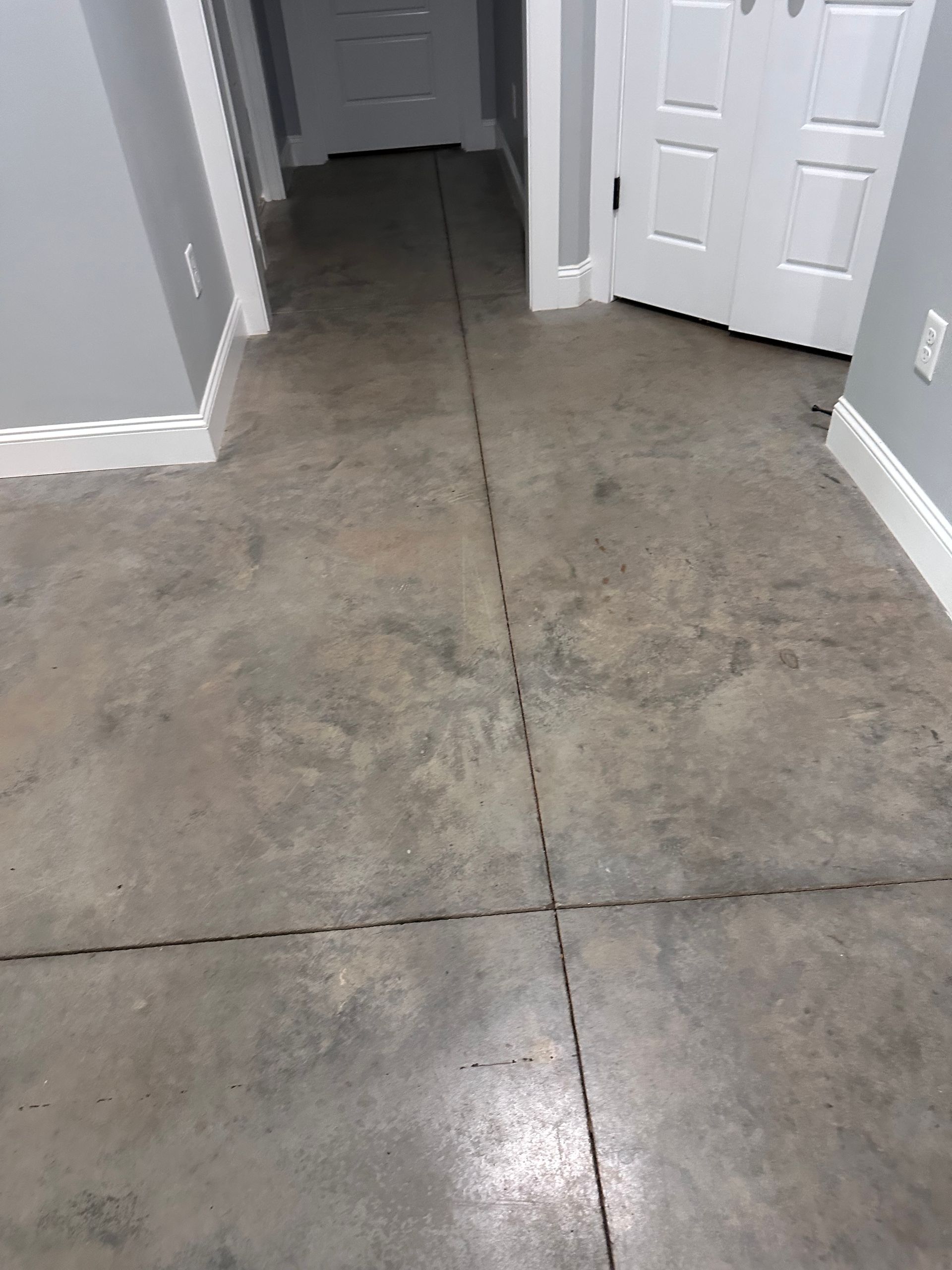
The widest presentation view shows how the neutral decorative floor complements gray walls and bright white trim.
Why Decorative Concrete Works So Well Indoors
Concrete is often treated as something to cover up. Decorative finishing changes that equation. Interior concrete can be enhanced in many ways, including coloring, staining, polishing, coatings, overlays, scoring, and other decorative techniques, depending on the slab and the desired result.
That versatility makes concrete especially interesting in basements, where the floor spans a large portion of the room. Instead of functioning only as a substrate, it can contribute color, pattern, sheen, and visual depth of its own.
Every slab and project is different, so the exact finishing system should be selected after evaluating the existing concrete. Explore B&B Decorative Concrete services or contact the team to discuss your floor.
What Makes This Basement Floor Stand Out
The appeal of this project comes from the way several visual elements work together rather than from a flat, uniform color.
Natural Color Movement
The floor carries lighter and darker neutral tones across the surface, creating depth and an organic, stone-like sense of movement.
Defined Floor Sections
Straight linear divisions break the large surface into intentional sections and add another layer of visual structure.
Finished Sheen
Light reflecting from the surface gives the floor a finished interior presence and helps highlight the variation in the concrete.
Whole-Room Impact
The neutral floor works naturally with gray walls and white trim, helping the basement read as a coordinated living environment.
Basement Concrete Flooring: More Possibilities Than Plain Gray
Homeowners researching basement flooring often encounter stained concrete, polished concrete, decorative overlays, dyes, coatings, and other finish systems. Those are distinct processes, and the best choice depends on the slab, moisture conditions, design goals, and desired appearance.
What they have in common is the ability to rethink concrete as the finished floor rather than simply the material underneath another floor. Decorative treatments can range from subtle neutral variation to stronger color, patterns, scoring, and different sheen levels.
This Project Spotlight is intentionally focused on what the photographs establish: a completed decorative concrete basement floor with substantial color variation, defined sections, and a finished sheen. B&B can evaluate your own concrete and recommend an appropriate system for the result you want.
Explore More Concrete Transformations
From interior floors to patios, porches, and pool decks, B&B Decorative Concrete helps turn ordinary concrete into a stronger part of the overall design.
Frequently Asked Questions About Basement Concrete Floors
Can an existing basement concrete floor become the finished floor?
Often, yes. Existing concrete can be a candidate for decorative finishing, but its condition and the goals for the room should be evaluated before choosing a specific system.
What decorative options are available for basement concrete floors?
Options can include stains, dyes, polishing, overlays, coatings, scoring, and other decorative treatments. The appropriate choice depends on the existing slab and the appearance and performance you want.
Does decorative concrete have to look like plain gray concrete?
No. Decorative concrete can incorporate different colors, tonal variation, patterns, divisions, and sheen levels to create a more customized interior appearance.
Is the floor in this project stained or polished concrete?
The photographs clearly show a decorative finished concrete surface with tonal variation and sheen, but they do not establish the exact finishing system used. B&B can explain which process is appropriate for a specific floor after evaluating it.
Can B&B help with decorative concrete for other interior rooms?
Yes. B&B Decorative Concrete works with interior as well as exterior concrete surfaces. Contact the team to discuss the space, existing concrete, and the finished look you have in mind.
Ready for Your Own Basement Transformation?
If you are looking at an ordinary basement slab and wondering what it could become, talk with B&B Decorative Concrete about turning the floor itself into part of the finished space.